Preserving Traditions, Community and Folk Dance in Orotva
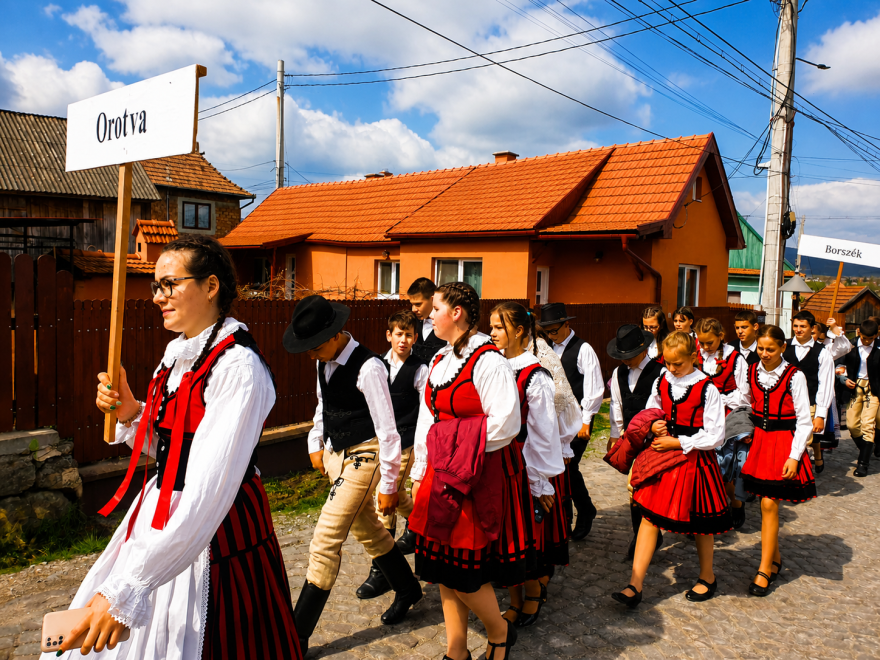
Folk dance and the preservation of traditions have a history of several decades in Orotva. Dance groups have been active in the village since the 1960s, renewing themselves several times over the years. Although the members have changed from one generation to the next, the common goal has always remained the same: to preserve and pass on the values of our folk culture.
The current Sóza Folk Dance Group was relaunched in 2015, at the initiative and under the guidance of the late Laczkó Enikő Márta, a teacher of Hungarian language and literature. Her work played a defining role in enabling the children and young people of Orotva to reconnect, within an organized framework, with folk dance, folk traditions and the experience of community.
The Origin of the Name Sóza
The name of the dance group, Sóza, refers to one of the well-known pasture and forest areas of Orotva. This beautiful landscape not only evokes the natural charm of the village, but also symbolically connects to the mission of the group: the preservation of local values, memories and traditions. The name expresses, at the same time, attachment to Orotva, love for the homeland, and the desire for the cultural heritage of the local community to remain alive and accessible to younger generations.
Instruction and Group Leadership
The professional development of the Sóza Folk Dance Group has been supported over the years by dedicated instructors. Folk dance instruction was initially led by Sándor Csaba, and later this role was taken over by Rigmányi Lajos.
The current leader of the group is Puskás Olga, a primary school teacher, who coordinates the community’s activities with great care and dedication. Dance rehearsals are held weekly under the guidance of instructor Rigmányi Lajos.
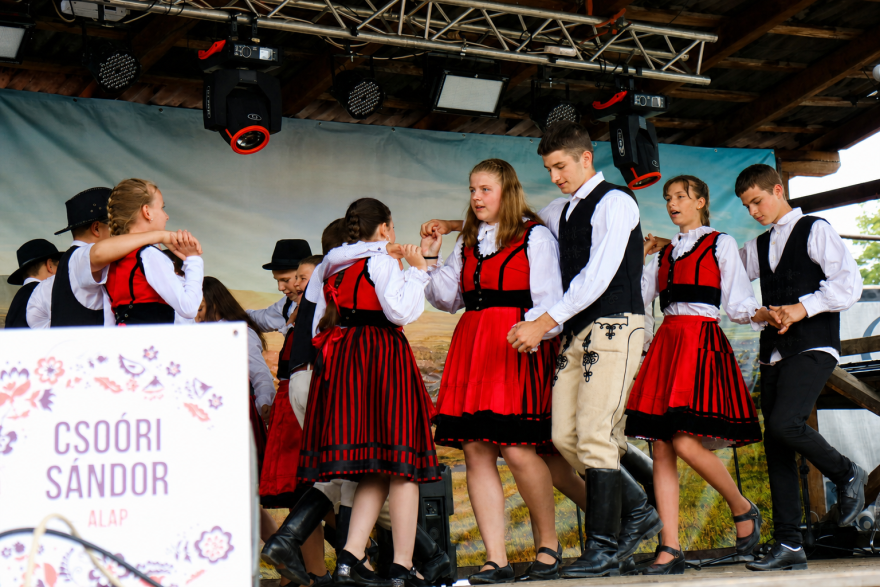
The rehearsals are not only about learning dance steps; they also teach children and young people discipline, perseverance, responsibility toward the community and attention to one another.
Our Mission
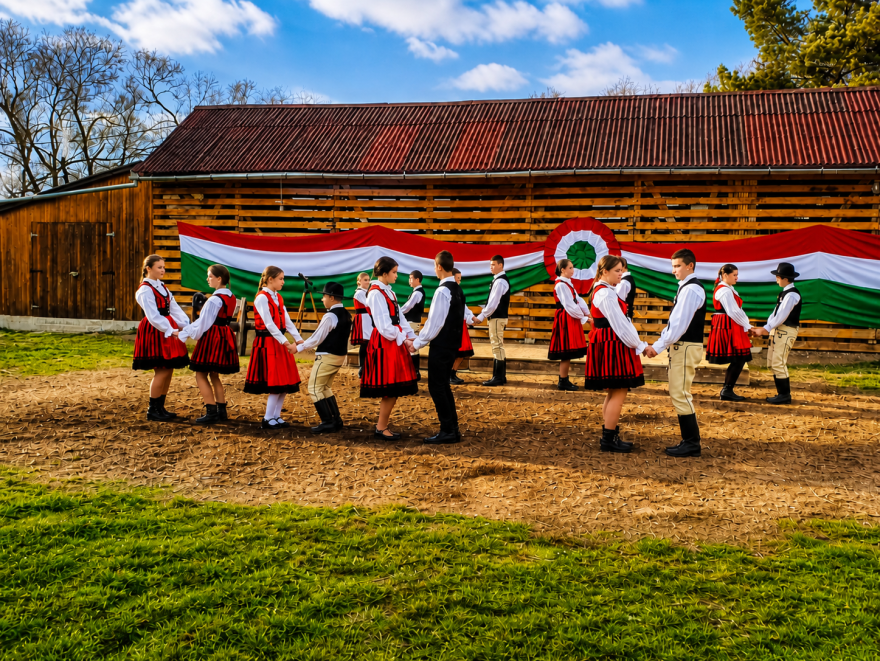
The main goal of the Sóza Folk Dance Group is to preserve, nurture and pass on the local and Transylvanian Hungarian folk culture. We consider it important for children to become familiar from an early age with the world of folk dance, folk music, traditional costumes and community customs. For us, folk dance is not merely a performance or a stage appearance, but a living connection with the past. It is a value that brings generations together, strengthens identity and contributes to keeping the cultural life of Orotva rich and vibrant.
Performances and Community Role
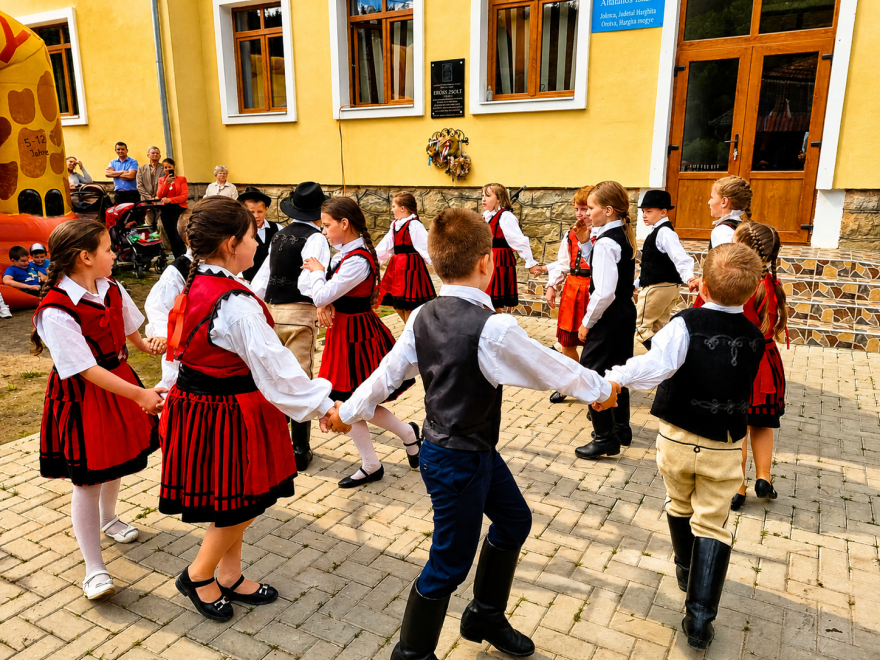
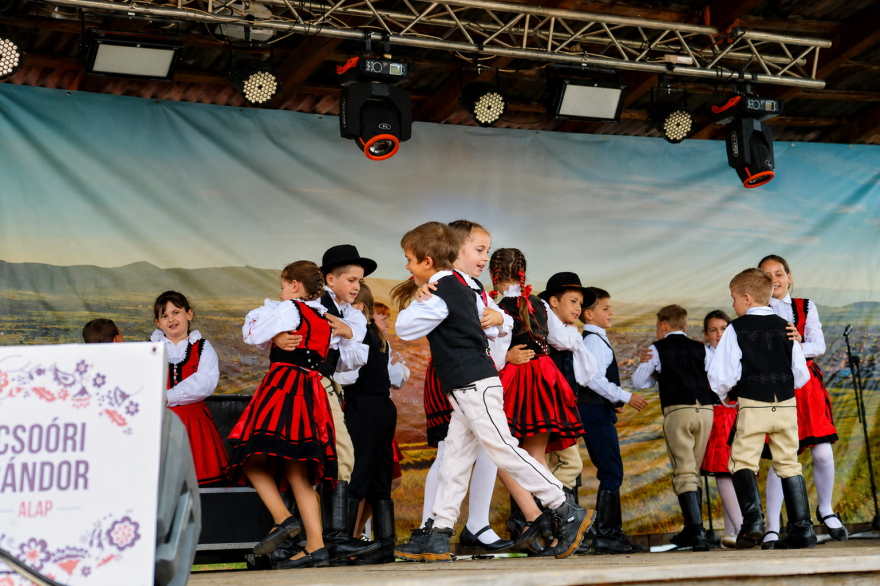
The Sóza Folk Dance Group regularly takes part in local events and cultural programs organized in the surrounding settlements. Our performances include school opening and closing ceremonies, school events, carnival balls, village days, folk dance gatherings and other community occasions.
Neighbouring settlements also invite the group each year to various cultural events, where the children and young people have the opportunity to present their knowledge, traditional costumes and the dances they have learned during rehearsals.
These occasions represent important community experiences: performances strengthen self-confidence, the sense of belonging to a community, and offer an opportunity for the cultural values of Orotva to be presented in other settlements as well.
Continuity and the Future
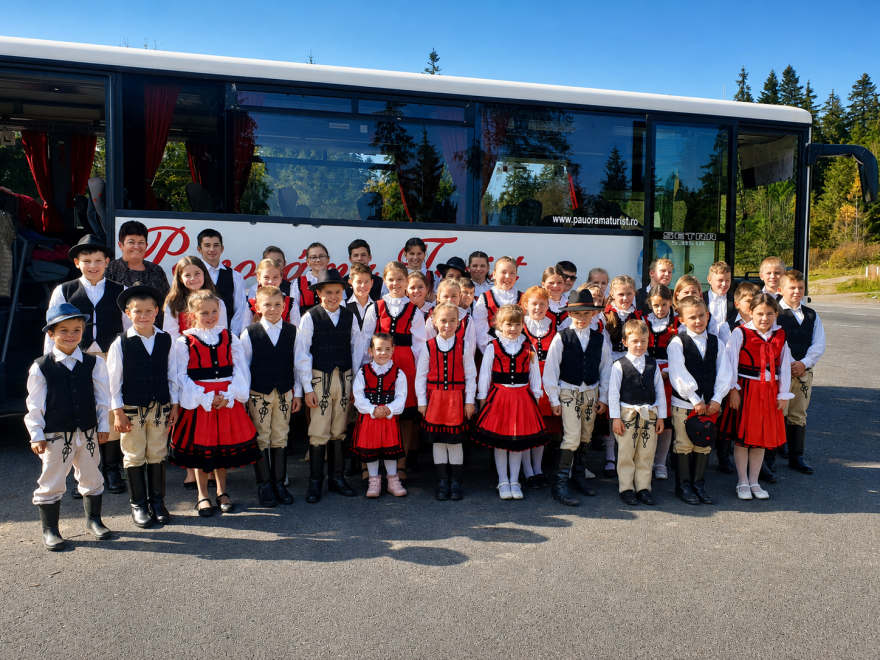
One of the most important foundations for the continuity of the dance group is ensuring the involvement of new generations. In this respect, the local school and the growing generation of children in Orotva play a particularly important role, as children represent the future of the community’s cultural life.
The Sóza Folk Dance Group plays an important role in the cultural life of Orotva. Through our work, we wish to contribute to keeping folk dance, the preservation of traditions and community spirit present in the everyday life of the village for as long as possible.
We believe that as long as there are children who dance with joy, instructors who pass on their knowledge, and a community that appreciates this work, the Sóza Folk Dance Group will continue to remain one of the valuable cultural communities of Orotva.